
Cassava to Gari: How 4 Tons Fresh Root Become 1 Ton Gari
Peel, grate, ferment, press, sieve, fry — the Sunnyside Cassava-to-Gari processing yield and quality controls.
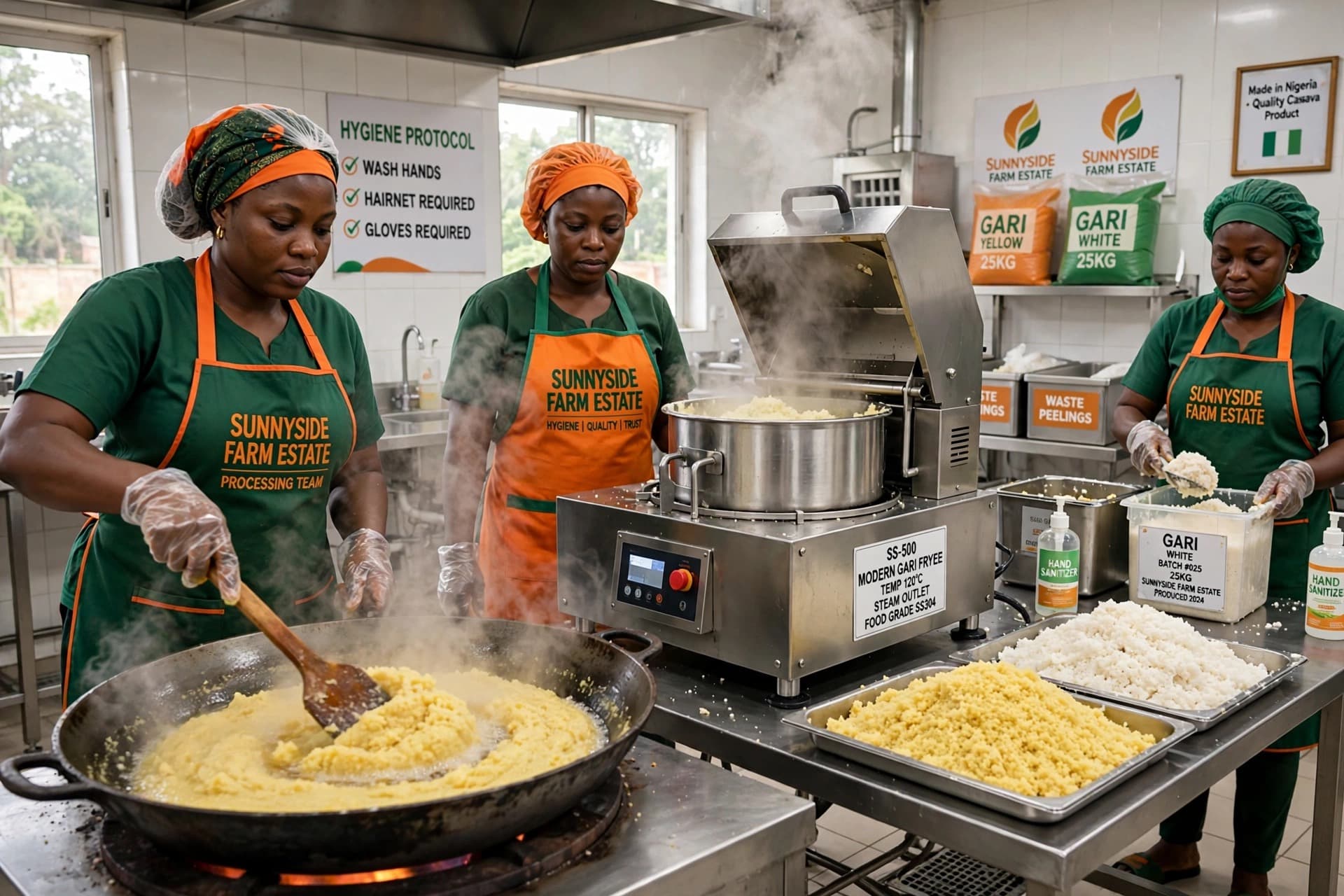
Fresh Cassava root is not Gari until it is processed. At Sunnyside, the planning ratio we teach partners is roughly four tons of fresh Cassava to one ton of finished Gari — a conversion that depends on dry matter, fermentation, and frying control.
Our process: peel and wash, grate, ferment (typically about three days for Ijebu-style character), press, sieve, and fry. Quality checks protect moisture, granule size, and flavour so branded bags hold premium prices at Bodija, Mile 12, and export channels.
Processing and packaging costs sit inside the production funding model alongside Cassava stems and farm labour. Partners fund the chain; Sunnyside manages the farm and plant. Farm ownership stays 100% with RC 9101322.
Want the numbers? See the transparency example: tonnes of Gari × branded price per ton, minus production, processing, and sales costs, then a 60/40 net split between production partners and the farm manager.